Component Geometry and Variation for Pouch-Spout Orientation & Presentation
Provide normal, marginal and supplier-variant spouts. Record flange, bore and orientation details, and show the exact position required at the sealing or assembly station.
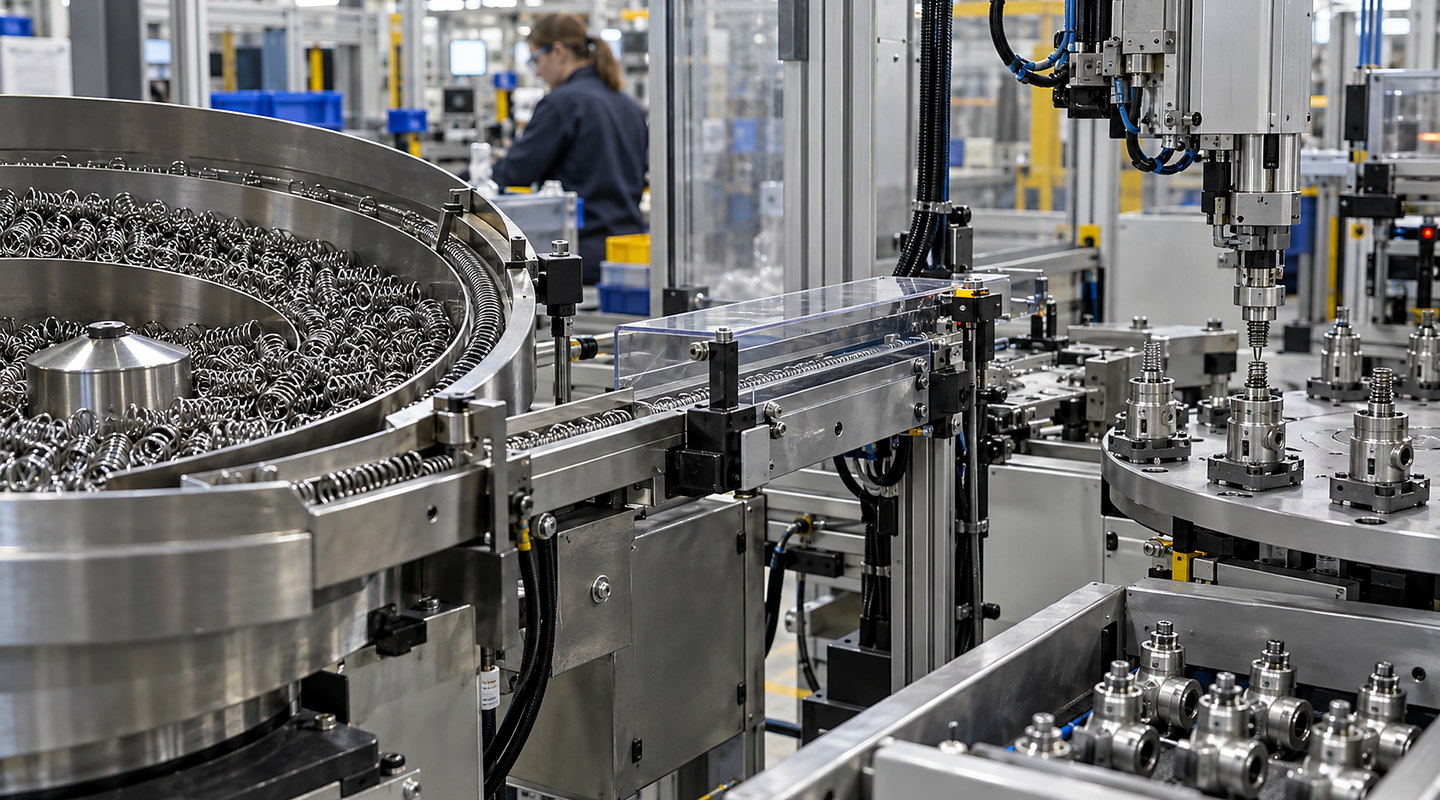
Plan bulk pouch-spout feeding around representative components, replenishment and usable delivery to a sealing or assembly station.
Illustrative spring-feeding equipment.
For bulk pouch-spout feeding, first establish the component range, the condition in which spouts arrive and the orientation needed at the sealing or assembly station. Use representative spouts to trial separation, transfer and the receiving interface before agreeing a layout.
Judge the trial by accepted spouts delivered to the downstream process, including replenishment, pauses and recovery. A nominal feeder output does not establish that the complete interface will meet the required operating pattern.
Plan bag spout feeders around real component variation, bulk condition, orientation, usable delivery rate and the downstream interface. Discuss representative part trials with Sorting Solutions. For bulk presentation using pouch-spout orientation and presentation, the deciding details include component geometry and variation for pouch-spout orientation & presentation, bulk condition and replenishment method and jam, damage and recovery acceptance checks.
Discuss your application
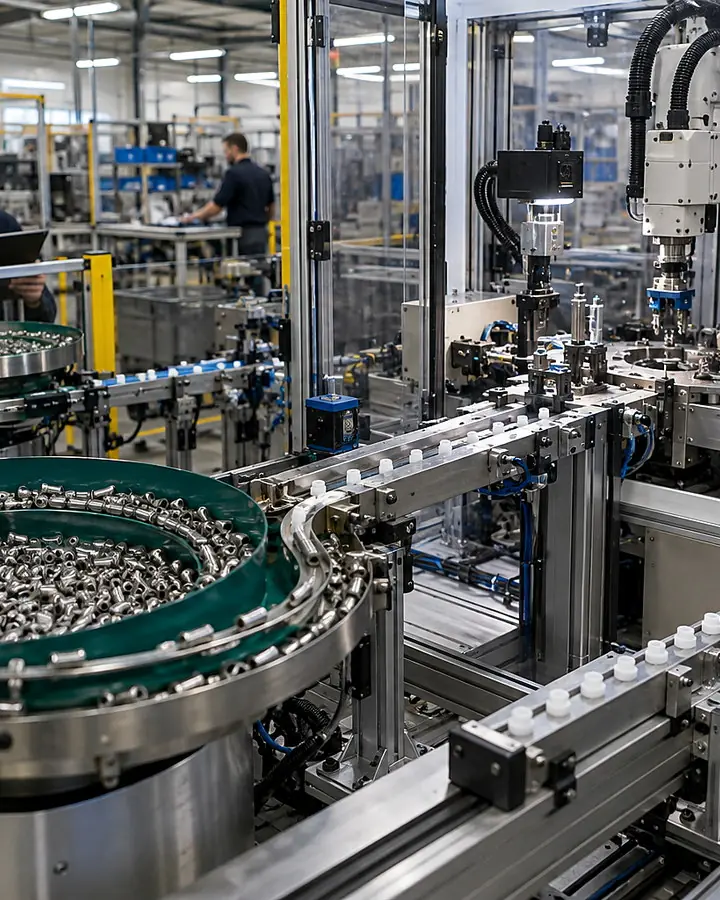
Provide normal, marginal and supplier-variant spouts. Record flange, bore and orientation details, and show the exact position required at the sealing or assembly station.
Trial the surface condition and fragile or entangling cases represented in production. If bulk handling damages the parts or adds unsuitable complexity, compare another presentation method.
Show how spouts arrive in bulk and how normal replenishment is carried out. Include the credible variation and interruptions that the separation and presentation trial must handle.
Agree the required orientation and count accepted spouts at the receiving station. Include pauses, bursts and replenishment so the observed delivery represents the sealing or assembly process.
Show how the receiving station requests and confirms each spout, together with the exact hand-off position. Agree buffer space, access for clearing a jam and the intended restart sequence.
Agree the jam, damage and recovery cases to demonstrate, the method and repetitions, and how results will be recorded. Define the response when an observation falls outside the agreed range.
Include replenishment, normal production, planned change, short stops, fault recovery, cleaning and maintenance for bulk presentation using pouch-spout orientation and presentation. A fast automatic step can still leave your team with a slow or awkward overall process.
Run the agreed product or part mix for bulk presentation using pouch-spout orientation and presentation at your intended operating pattern.
Include credible extremes for component geometry and variation for pouch-spout orientation & presentation and surface, fragility and entanglement behaviour.
Show how the proposed solution detects a problem affecting bulk presentation using pouch-spout orientation and presentation, responds safely, informs your team and restarts under control.
Compare with Flexible or Metered Delivery Involving Pouch-Spout Orientation and Presentation if that operating pattern is closer to your application.